
Introduction
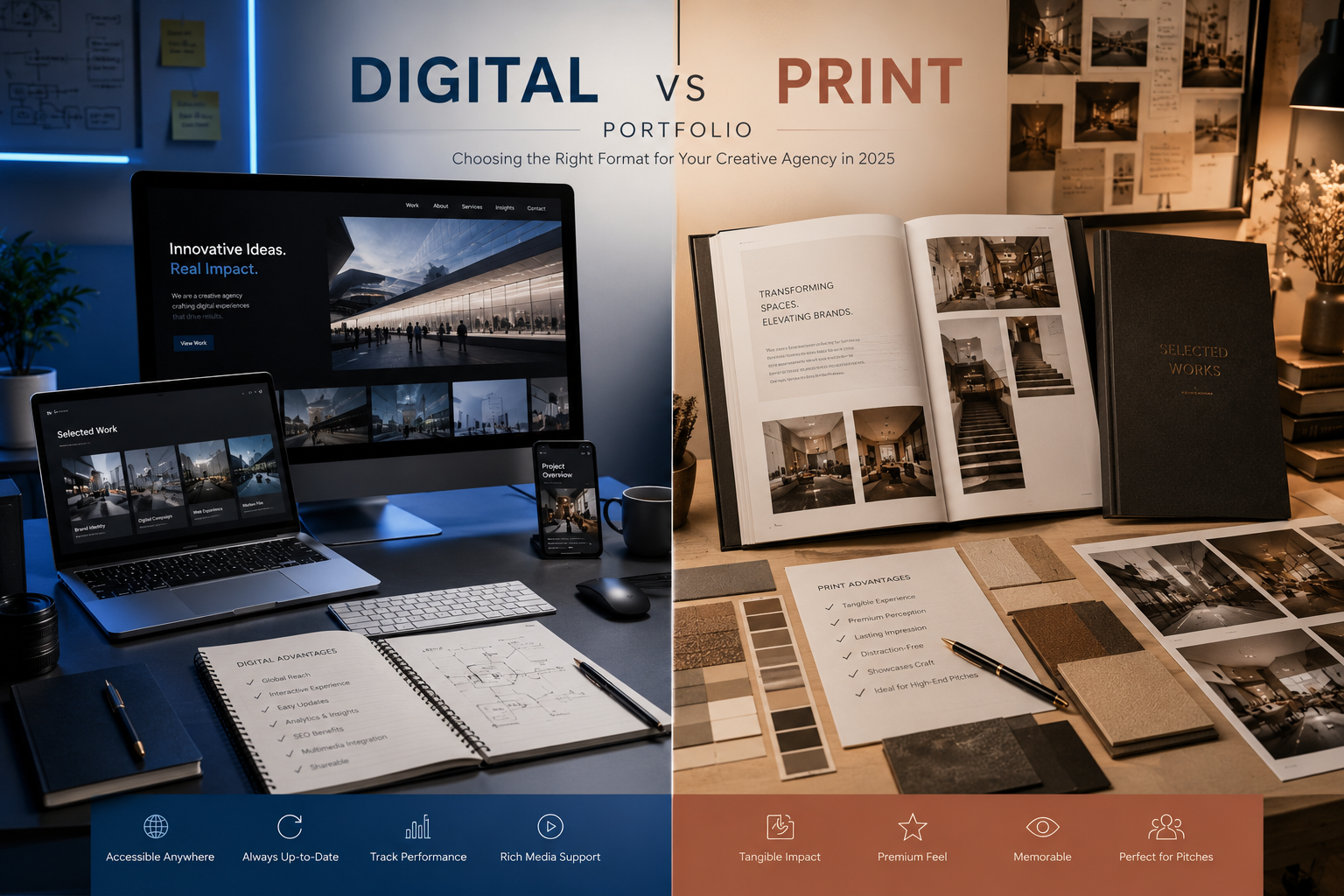
The portfolio format debate — digital versus print — has been ongoing in creative circles for years. In 2025, the question is less about which is superior and more about which serves which purpose, for which audience, in which context. Creative agencies that perform best in competitive pitches are those who have thought carefully about portfolio presentation across formats and use each one deliberately. This guide explores the strengths, ideal use cases, and strategic logic behind digital and print portfolios — and gives you a framework for deciding what your agency needs right now.
The Case for Digital Portfolios
For most creative agencies in Bangalore in 2025, a custom-designed website is the non-negotiable foundation of your new business development infrastructure. Discovery happens online — when a potential client evaluates agencies, their first move is almost always a web search or referral link. A well-built portfolio website with strong SEO can surface your agency in searches for ‘creative agency Bangalore,’ ‘video production house Bangalore,’ or ‘corporate branding agency,’ putting you in front of clients who are actively looking. Digital portfolios also allow you to showcase video in its native form, collect analytics on which case studies perform best, and update your work instantly when new projects come in.
The Case for Print Portfolios
Print portfolios are not obsolete — they are simply more specialised in their application. In in-person pitches and boardroom presentations, a beautifully produced print portfolio creates a physical, tactile experience a laptop screen cannot replicate. Paper stock quality, printing finish, and binding are signals of craft and attention to detail that resonate strongly with luxury, real estate, and enterprise B2B clients. Print leave-behinds at networking events also create tactile memory: physical items sit on desks, get returned to, and are processed differently from digital content. For agencies whose target clients include architecture, interior design, or high-end hospitality, print investment is often justified.
The Behance Question
Many creative professionals use Behance as their primary portfolio platform, particularly in the early stages of their careers or agency growth. Behance has real advantages — it is free, has a built-in creative audience, and provides quick credibility. However, Behance has significant limitations for agencies seeking enterprise or premium clients. You cannot control the experience, competitors appear in the same interface, you cannot track meaningful analytics, and the Behance aesthetic communicates ‘freelancer’ rather than ‘agency’ to many buyers. Use Behance as a distribution channel for your work, but never as your primary client-facing portfolio.
The PDF Portfolio: The Bridge Format
Between a custom website and a print portfolio, a well-designed PDF occupies a specific and valuable niche. It is the ideal format for cold outreach, email pitches, and sharing work with clients who ask to see a portfolio before an initial call. An effective agency PDF portfolio should be ten to fifteen pages maximum, designed with the same quality and consistency as your website, optimised for screen viewing, and structured to tell your story quickly — credentials, case studies with outcomes, process overview, and clear contact information. It should stand completely alone without requiring verbal explanation.
Raw Creations’ Format Recommendation for 2025
For creative agencies in Bangalore in 2025, the recommendation is: a custom website as your primary portfolio, a PDF portfolio for outreach and leave-behind, and print materials only where your specific client segments and pitch contexts justify the investment. The custom website gets the most ongoing attention — it is your most visible business development asset. The PDF should be refreshed quarterly as new work comes in. Print materials should be evaluated project by project based on the nature of the pitch.
Conclusion
Digital and print portfolios are not competitors — they are complements serving different roles in your new business development strategy. The key is knowing which format serves which purpose and investing in each with the level of quality your target client’s expectations demand. Raw Creations designs portfolio websites and PDF portfolios for creative agencies and professionals in Bangalore. If your current portfolio is not generating the client inquiries your work deserves, let’s rebuild it with intention. Get in touch today.